Live virtual Masterclass on November 5th at 3pm Central

FREE VIDEO TRAINING FOR People With Parkinson's
Discover How You Can Reclaim A Life Of Confident Movement By Reducing The Burden Of Parkinson's Symptoms Today
Discover How You Can Reclaim A Life Of Confident Movement By Reducing The Burden Of Parkinson's Symptoms Today
...this is for you if you're meeting exercise recommendations but are frustrated by not seeing the improvements you think you should!
A few quick questions first, so the call starts useful. Takes about two minutes.
13 years · Parkinson's only
13,000+ one-on-one hours
M.S. Motor Learning · Columbia University
13 years · Parkinson's only
13,000+ one-on-one hours
M.S. Motor Learning · Columbia University
The real problem
It's costing you more than hard days

"Just keep moving. Just keep exercising. Trust the process." How many times have you heard that? So you did. The group classes, the boxing, the daily walks, the PT sheet taped to the fridge. And somehow you're still moving slower, freezing more often, thinking through steps that used to be automatic.
Here's what almost no one explains. Your brain runs a cost calculation on every movement: is this worth the effort? Dopamine keeps that negotiation balanced. As it declines, the cost side starts carrying more weight than it should, and the answer keeps coming back the same way. Too expensive. Not impossible - too expensive. That's why standing up, turning around, or taking the first step can feel exhausting when nothing about your legs has changed. Your neurologist calls it bradykinesia. Most people are told it means slowness. It means small output for a big cost.
None of this is your fault. It isn't laziness and it isn't weakness. Your brain is solving movement with fewer options, spending your effort through the path of least resistance - the arms grab, the knees push, the center of the body sits out. You put more in and get less out, running an effort debt your day never repays.
The real cost is the gap. Good days stay good, hard days get harder, and the space between them grows. More stress, worse symptoms. Worse symptoms, more stress. That's the spiral that shrinks a life - the invitation you decline, the walk you cut short, the concert you skip because you don't trust your body in a crowd.
"I've done the work. I'm in every class, and I come home shuffling to the door. Something is missing."
A client, on her first call with Darbe
Why "doing more" keeps failing you
It's a learning problem, not an effort problem

The old way
Push harder and hope the body finally cooperates
Another class built on "just keep moving," another round of 3 sets of 10
Follow a metronome or a counting cue, then freeze the moment it disappears
Chase the arm swing, when the arm swing is the byproduct of walking well
The new way
Lower the cost of movement so your brain stops pricing you out of it
Rebuild internal timing so you can lead your own body, no cue required
Make every repetition teach the brain a pattern worth keeping
Train strategies on good days that stay accessible on the hard ones
What it looks like when the learning starts
(Real client Expereinces)
13 → 3
Bob · Nighttime trips to the
bathroom
Bob was getting up 13 times a night and crawling to the bathroom because he didn't trust his balance. One cue - count your heel strikes - changed the math. Not 13. Three.
74
Louise · Returned the walker
Louise was 74, two hip surgeries in one year, dependent on a walker. About three sessions in, she started leaving it behind. By November she returned it to the rental store.
I'm not telling you this to promise the same path. Not for every client, not in every case. I'm telling you because both changes came from learning — and learning is trainable.
Be honest with yourself here
Is this the right move?
Book the call if
You're doing the work - classes, walks, therapy - and still losing ground
You want the mechanism behind your symptoms, because you like knowing why
You're willing to practice between sessions and be a beginner at something new
Skip it if
You want a quick fix without learning what's underneath it
You're looking for another workout to follow, and nothing more
You're not ready to commit to a year of structured practice
A few quick questions first, then pick your time.
About two minutes.
The next step
Let's talk
Who is Darbe And Why Does she do this?
Darbe watched people do everything right and still lose ground
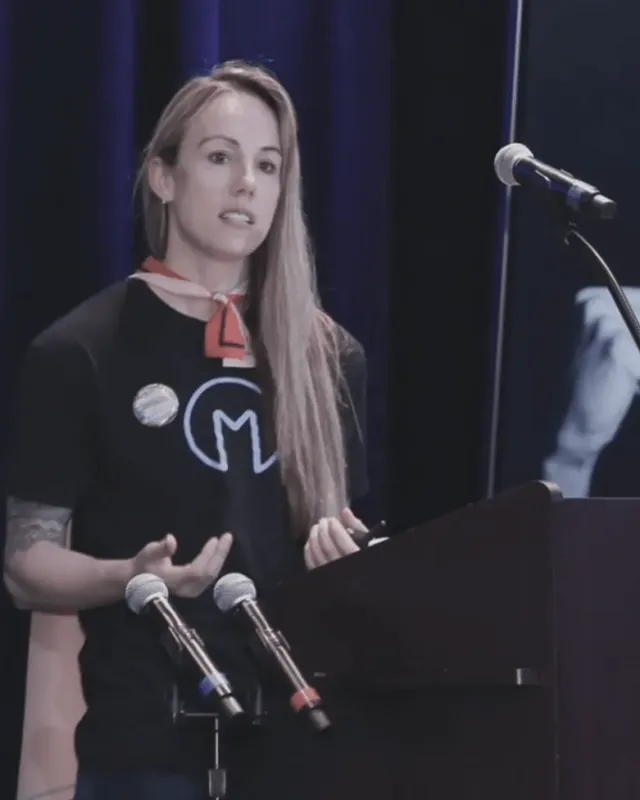
Darbe Schlosser isn't a physician, and she'll tell you that before anything else. She's a motor learning scientist with 13 years experience and more than 13,000 hours in the room, one on one, with people who have Parkinson's.
For years she watched the same pattern. People working incredibly hard: cycling, boxing, big-movement classes and still stalling. They'd improve, then hit a wall that no amount of effort would move. And the answers on offer felt incomplete. Just keep moving. Trust the process. But Parkinson's changes hour to hour, and what works at nine in the morning may not work at noon.